

The Conga Line

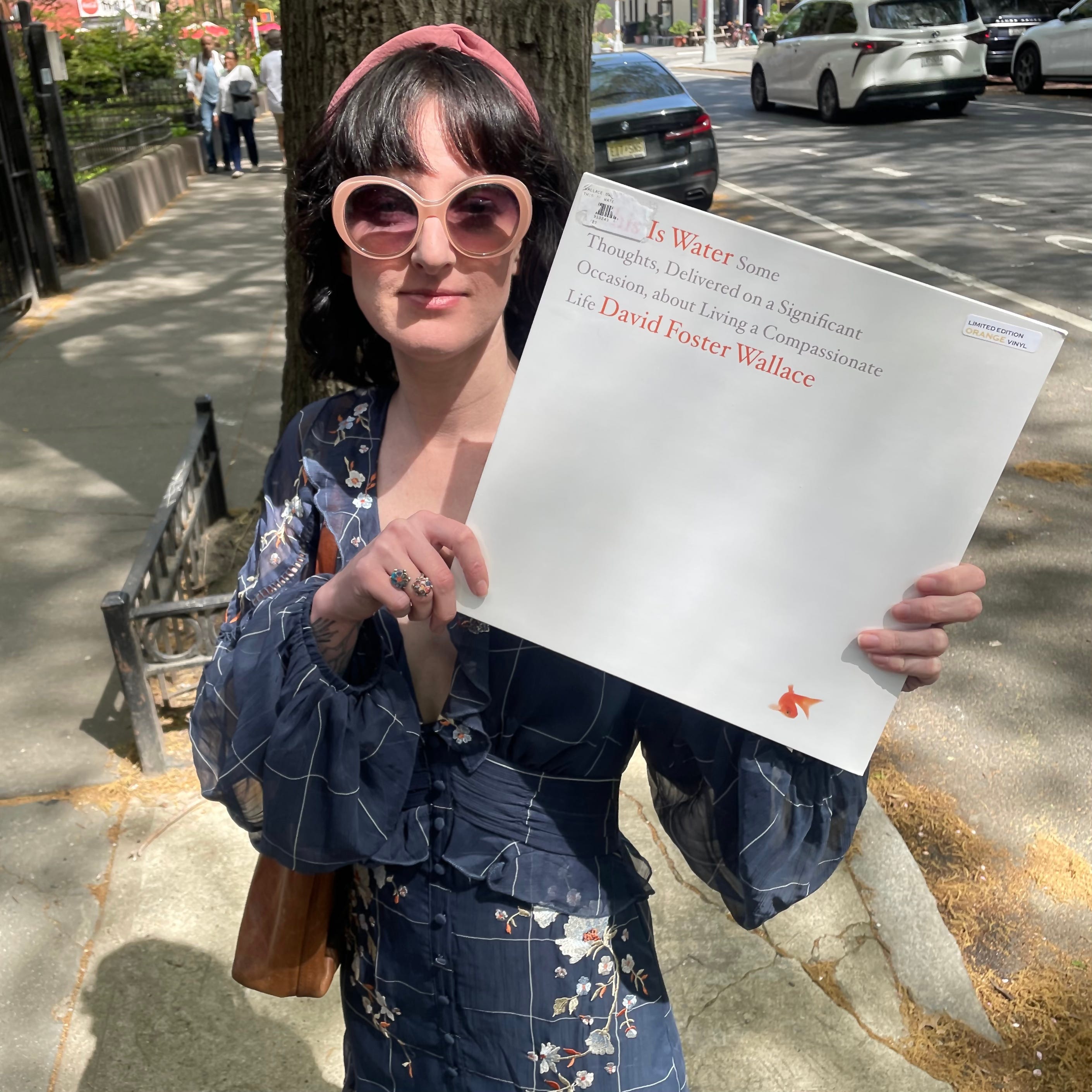
Earlier this week, The Small Bow published my very long profile of David Foster Wallace’s only sibling, Amy.
It’s quite surreal to me that this story exists — and that I’m the one who had the privilege of writing it. It happened for two reasons: Amy was willing to make herself extremely vulnerable and fearless in the process of letting me get to know her (and for her to get to know me), and because I have a deep trust of the people who edited and published it.
This story isn’t one I pitched around. I had been talking to Amy on and off for a few months and then my friends at The Small Bow (A.J. Daulerio and Tommy Craggs) asked me to find a reported piece that would resonate with the recovery community.
I guess that’s what we did. The response to this story has been incredibly kind, thoughtful, and hard to process. I understand that there’s a constant fervor toward anything that seems novel about David Foster Wallace.
The bar for that is high, though. His work and his life have been so thoroughly examined that (at least in my social circle) he is not so much of a real person anymore, but a totem of identity or prestige.
A person I know who worked at Shakespeare & Co. in the 1990s (he has both a random signed galley of Infinite Jest and some true horror stories about Nora Ephron, my mean queen) even told me he was surprised by my interest in entering the DFWverse.
“I would have thought that for a millennial woman, the thought of David Foster Wallace would just make you roll your eyes,” he said.
When I was younger, yeah. It wasn’t until I was in my 30s that I realized I could just read his work and engage with it in my own way. I started with his tennis writing, because I was a sportswriter and love sportswriting and love reading non-sportswriters on sports. His work never became a part of my life and identity the way Elena Ferrante, Susan Sontag, and Rachel Cusk have. (Yes, I know that this is basically the gender reductive version of Wallace, Roth, and Franzen.)
But I am always interested in the women who surrounded and supported famous men — be it athletes (I’ve interviewed so many CTE wives) or, in this case, the most revered American author of the 20th century. I wasn’t so interested in David (sorry, buddy), but I was really interested in Amy.
My hope is that many of the people who read this story had the same takeaway as me: Amy is brilliant and brave, and her brother was very fortunate. Her willingness to put herself out there is the rare corrective to the flattened, eye-rolly perception of David.
I also would not have trusted anyone but The Small Bow with this story. Over the last few years, it has been amazing to watch the community grow in scale and scope — and I knew that the planned audience for this piece is one that is familiar with illness, recovery, and some very sad things.
It was never going to be framed and written for shock value or to go viral. A.J. and Tommy were asking me to write something for The Small Bow’s readers, and that was what gave me the confidence to go for it.
My hope is that by hitting this story’s other natural audience — DFW readers — there will be some people who get to discover The Small Bow for the first time. To me, it is brave and bold and meaningful to create a space on the internet for those of us who have found life to be difficult in many ways and have had to bounce back from some real periods of darkness.
The site has been important for me over the last few years, and A.J. is a real inspiration to me. And I knew that Tommy, who personally saw the cratering of my writerly confidence, would be able to help me pull out the best version of this story. Trusting the people I was writing this for outweighed the incredible lack of self-belief I had when I agreed to give it a go.
The whole experience of reporting, writing, and publishing this piece on Amy Wallace was quite emotional. For me, for her. I cried a lot while working on this — coming face-to-face with someone else’s grief certainly stirred up my own. But then, once the story was published and its readers seemed to see Amy the way I did, the whole project felt great.
I was able to see more of the humor in the story. I finally realized how absolutely funny it is that the big tough smart jock was absolutely terrified that one of his family members would be eaten by a shark. Nice veneer, bro. Would be a really beautiful thing if your little sister ever showed us what was behind it.
So, I am quite proud that I am somehow the random bozo who wound up with a byline on this really nice story of love and grief. I hope that Amy’s care for her brother reaches people who need it in one way or another.
I have extreme gratitude for A.J. and Tommy letting me write this piece the way I felt it should be written, and for making the story much better — and for helping me restore my confidence in the process.
Lindsey, you are not a random bozo. One of the reasons I enjoy your writing so much is that you show me a new perspective on someone outside of the context that I'm familiar with them (i.e. "artist," "DFW's sister," "Yankees pitcher"). It's why, even as a Red Sox fan, I continued to read your stuff even while you were on the Yankees beat.
A random bozo could not have written this story because a random bozo would not have earned their subject's trust like only you can!
Consider me one who discovered TSB via this article though I’ve never been a DFW guy. I’m stoked to see that this is what AJ and Tommy are doing.
It’s also awesome to see you finding your writing feet (in public) again. We all (craftspeople) go through it and it’s good, cool, brave, and relatable to share it.