

Lunacy

Sometimes at night when I am looking at the moon, I think about our earliest ancestors staring at the same bright rock in the same dark sky. I think about their primitive lives with their primitive tools and their primitive communities, and I think about how strange it is that humans spent millennia wondering one question: what is that?
The moon remaining a mystery to us wouldn’t impede its importance. It would heighten it, really. The glare of the sun bouncing back onto our planet would provide essential light in a mostly dark world. It would still be pulling us and the oceans around and around. And it would be a marvel, which is what we consider it today.
We know about our moon now. We know what it is, why it shines, and — after politically inspired space exploration in the 1900s — we know that it’s dry, mostly dead, and pretty boring. There are many other moons out there, many of which are more interesting than ours. Some planets get multiple moons, others have big circulating rings of rocks.
Yet this is our moon, and it connects all of human history under its funny little glow. I think about people who existed before the invention of the wheel looking up at the same moon that I am staring at myself. Sometimes, I choke up. The sun keeps us alive. The moon keeps us curious.
I didn’t cry while watching the Artemis II launch last night, but I did record a video of my television as a way of having some part of this experience for myself. I watched the crew access arm swing away in the countdown to takeoff, thinking about all of the times I’ve watched Apollo footage of the same mechanism. I still can’t believe they built a rocket more powerful than the Saturn V. It’s absurd, ridiculous, and incredible.
We are sending people back to explore the moon. This mission is different from the goals of Apollo. The plan is for NASA to try to colonize the moon so that humans might reach Mars someday. My thoughts on a lunar colony are complicated, but that plan is still a long way off.
For now, four people have been launched further into outer space than any other human has ever gone. They won’t get to touch the moon, but they’ll see its dark side. I feel pangs of sympathy for these astronauts, too. It is selfish, but when I think about my very alternative life as an astronaut, I think that I would feel an unrelenting void if I didn’t get to touch the moon.


When I look at the moon, I can’t believe that I can see its craters with my own dumb eyes. I can identify some of the big ones, and I can tell everyone that right over there, on the waxing side, is the Sea of Crises. I joke that I should live there. It seems so close to us — and on the scale of our solar system, it is. But it still takes nearly a week to get there.
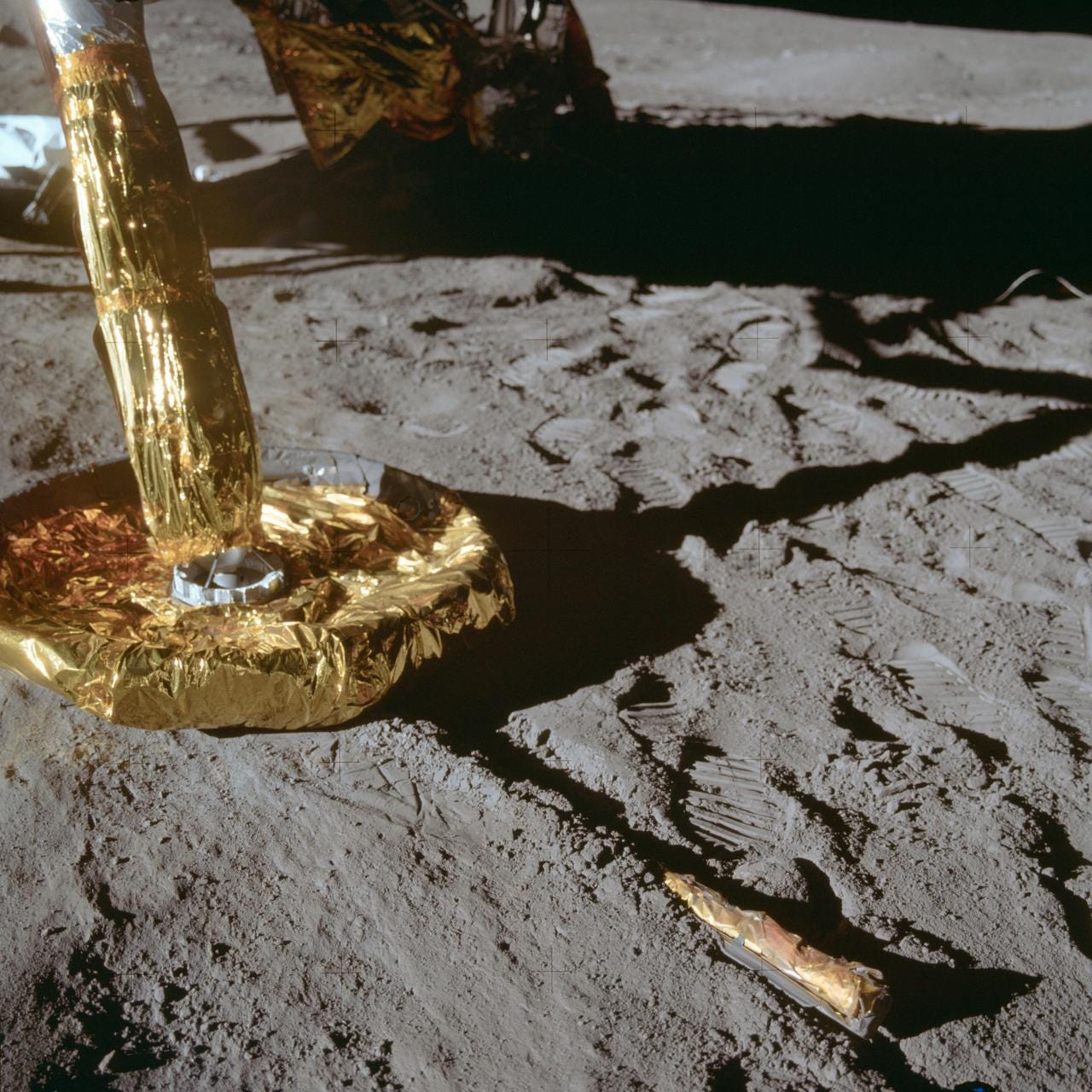
The moon seems very far away when I imagine Neil and Buzz stepping out into the Sea of Tranquility. (This one is only about 500 miles away from the Sea of Crises, which is really how it feels sometimes.) I squint at the moon and picture the lunar module and the people who stepped out of it. It seems like I should be able to see that from here. I don’t know why. I can hardly see people walking across the Brooklyn Bridge from the nearby Manhattan Bridge.
We have sent — and are going to send again — people to that thing in the sky. They’ll be so far away that their presence on the moon won’t remotely change the view I have from down here. I am still amazed that human beings have stood so far, far away on the big dusty rock that unites us all.
The moon is for me. The moon is for you. The moon’s name, Luna, is shared by every single dog in New York City for some reason. It is locked to our planet and we spin around in tandem. The moon is our own nightly fascination. How can something seem so far away and so close at the same time? Few people will ever get to go there, but every night for all of human history, we’ve had the privilege of seeing it from home.
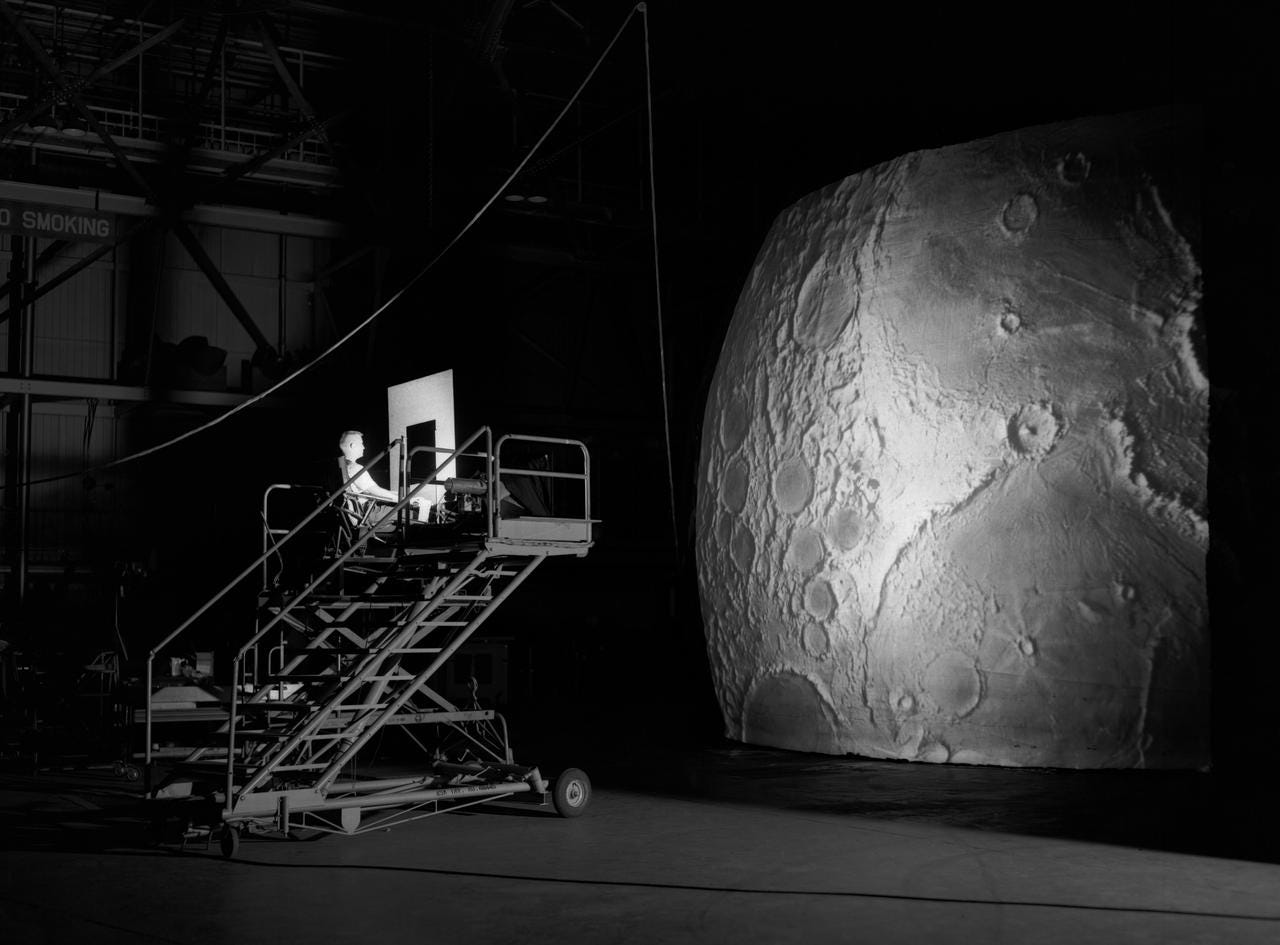
i feel like i should know what the last photo is (a museum piece? a simulator? the Truman Show?) but I don't and that's kind of fun too